内容概要
Choose a pick-and-place robot from the required part orientation, presentation method and accepted output rate. Compare the complete transfer system, including feeders, tooling, controls and protective measures. A fast arm is useful only when parts can be supplied, identified, held and released reliably within the proposed cell.
Write down the transfer the robot must complete
Describe the starting and finishing condition of one accepted part. Record where it arrives, how much its position varies, which faces may be touched and how it must sit at the destination. Include orientation changes: rotating a flat component on a bench is a different task from turning it over and inserting it sideways into a machine. Photograph the access around both stations, with dimensions and drawing revisions.
State the required output over a meaningful production period and identify the upstream and downstream equipment. Note whether arrivals are evenly spaced or occur in bursts. A workshop supplying ten parts together every few minutes has a different buffering problem from a continuously moving conveyor. Include rejected or missing parts in the process description so the system has an agreed response when the expected transfer cannot be completed.
Screen architectures by motion and access
Epson's official range includes SCARA and six-axis architectures, while ABB's IRB 360 is a delta family positioned for picking and packing. Those are useful starting categories, not evidence that any particular model meets your task. The table is an editorial shortlist: verify orientation freedom, working envelope and interfaces on the exact proposed variant. Cartesian systems also deserve consideration when straight transfers dominate and the installation can accommodate their structure.
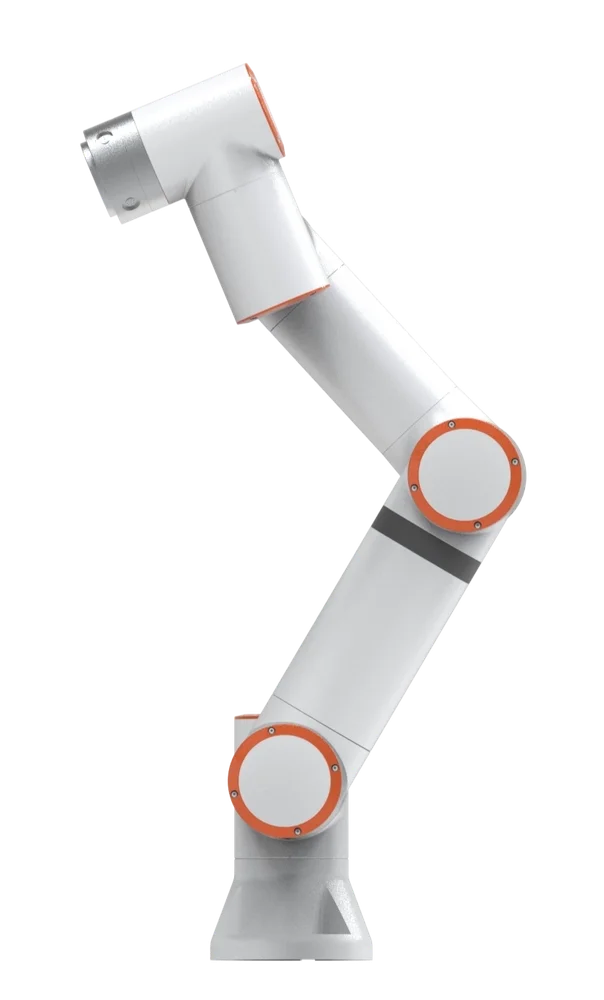
A six-axis arm can offer useful orientation flexibility, but that flexibility brings additional poses and paths to validate. A delta installation needs its overhead structure and production access considered from the beginning. A SCARA candidate may suit a planar transfer without solving a required sideways approach. Ask suppliers to show the complete part motion; a category name should never substitute for an application layout.
| Architecture | Reason to investigate | Question that can rule it out |
|---|---|---|
| SCARA | Planar transfer with vertical approach | Does the task need unsupported tilt? |
| Delta | Repeated picking above a conveyor | Can the overhead structure and orientation fit? |
| Six-axis | Changing approach angles and orientation | Can the full path meet production timing? |
| Cartesian | Transfers dominated by linear axes | Can the frame fit access and travel needs? |
参考资料: About Epson Robots: SCARA and six-axis ranges · IRB 360 FlexPicker, OmniCore C30 product overview
Price the way parts arrive
Presentation can dominate the complexity of a modest handling project. A tray with controlled nests provides different information from a bin of overlapping components. Describe the actual supply condition before requesting vision or feeding equipment. Ask whether the proposed system needs singulation, orientation, separation of stuck parts or a place to send parts it cannot resolve. Include the labour that prepares trays; it remains part of the workflow even if it happens away from the robot.
Compare a controlled-presentation option with a more flexible option using the same production volume. A supplier might propose tray exchange for the first and conveyor vision for the second. Request the changeover, replenishment and recovery assumptions behind each. Vision can supply pose information, but an identified component still needs an accessible grasp and a collision-free extraction. Do not treat a camera demonstration as proof of reliable bin picking.
Select the tool and load as one assembly
List the workpiece, gripper, fingers or cups, adapter, sensors and any carried services. Universal Robots' UR10e manual for PolyScope 5.21 explicitly treats the gripper and workpiece as part of payload and discusses centre-of-gravity effects. Use the selected manufacturer's documentation for the actual arm and tool; this reference is not a shared load chart for other robots. Ask the integrator to assess the changing load states throughout pickup, transfer and release.
Test the surfaces that matter: oil, porosity, seams, protective film and allowable marking can change gripping behaviour. Include an awkward acceptable part, not only a clean nominal sample. Specify how the controller distinguishes a usable grip from an empty closure or a weak vacuum acquisition. Then inspect the destination: the tool must release the component without dragging it, sticking to it or blocking the next operation.
Define placement quality independently of robot repeatability
Describe the accepted final condition in terms the downstream process uses. Examples include a component seated in a nest, a label facing outward or a connector positioned for the next assembly operation. A published robot repeatability figure does not include all effects of loose presentation, compliant fingers and an imperfect fixture. Have the supplier identify which mechanism establishes the final location and which measurement confirms it.
Use representative destination tooling during the trial. If a component is merely dropped onto a table for a video, the trial has not demonstrated insertion into your production pocket. Record damage, incorrect orientation and incomplete seating separately from failed pickups. A robot can complete every programmed move while producing unacceptable assemblies. Agree whether retries are allowed and count their time and outcomes explicitly.
Work through a hypothetical throughput comparison
Consider a fictional requirement for 300 accepted housings per hour. A candidate's demonstrated motion sequence takes 8 seconds, giving an arithmetic ceiling of 450 attempts per hour if nothing else consumes time. Suppose tray replenishment and ordinary stops leave 48 productive minutes in the hour. That permits 360 attempts; an assumed 95 percent accepted yield gives 342 accepted housings. These assumptions illustrate a calculation and are not specifications for a robot.
Now suppose the destination waits reduce productive time to 40 minutes. The same motion permits 300 attempts and only 285 accepted housings at the assumed yield, missing the target. Improving the arm's motion might help, but the evidence points first to destination availability. Request a trial that records accepted output over the agreed period, alongside replenishment, blocked outfeed and recovery. Keep the fastest isolated transfer as a diagnostic number.
Review access, services and protective measures
Reserve floor space for replenishment, tool storage, maintenance and the rejected-part route as well as the robot base. For an overhead machine, review the supporting structure with the responsible designer. For a bench installation, check that movement and vibration of the bench have been considered. Identify power, air, vacuum, network and controller requirements, including who supplies the connections and verifies compatibility.
Universal Robots' PolyScope 5.19 risk-assessment documentation assigns application assessment to the integrator and includes tools, obstacles and other equipment. The purchasing implication is to request a reviewed access arrangement for production, setup and recovery. Ordinary part sensors do not become safety devices merely because they stop a program. Have the competent integration team specify and validate the protective measures and allowed operating modes for the completed installation.
Buy a repeatable configuration and a maintainable changeover
Ask for a bill of equipment covering the feeder or trays, end effector, mounting, sensing, controller options, interface work and commissioning. Refer to the separate quotation guide for commercial comparison, then add application evidence: representative parts, destination fixtures, agreed output, quality results and recorded interventions. Keep estimates and demonstrated results distinguishable. Manufacturer claims about speed or ease of setup should not be substituted for that evidence.
Have the intended operator demonstrate an approved changeover using the supplied instructions. Check identification of tray, tool, part recipe and destination fixture so incompatible combinations are caught before a run. Obtain editable program deliverables and a documented route to restore the accepted configuration. Choose the proposal that meets the real transfer with supportable operating work, then retain the sample set and trial record for future changes.
检查清单
- Define the initial and final condition of an accepted part.
- Identify every required orientation and approach direction.
- Compare presentation methods including their preparation labour.
- Review complete tool load against the selected robot documentation.
- Test grip, marking, release and final seating on representative parts.
- Measure accepted hourly output with routine interruptions included.
- Agree access, safeguarding, changeover and recovery responsibilities.
常见问题
Is a six-axis robot always the most flexible purchase?
It offers orientation options that can be useful, but practical flexibility also depends on tools, feeders, software and changeover work. Compare the actual future part families and required approach paths before paying for motion capability the application may never use.
Can a brochure cycle time establish my production rate?
No. It describes the manufacturer's test conditions. Your output also depends on pickup, part availability, destination readiness, rejects and recovery. Use a representative timed trial and retain the operating configuration and all interventions with the result.
来源与审核
Architecture and purchasing guidance checked on 6 September 2026, without hands-on product testing. Product ranges are illustrative; confirm exact variants and manual revisions. All timing examples are hypothetical.
适合读者:Small-workshop buyers planning part transfer automation. 更新于 .
- About Epson Robots: SCARA and six-axis ranges
- IRB 360 FlexPicker, OmniCore C30 product overview
- UR10e Maximum Payload, PolyScope 5.21 manual
- UR5e Risk Assessment, PolyScope 5.19 manual